
Interview with Brooklyn Acupuncturist, Kate Weil
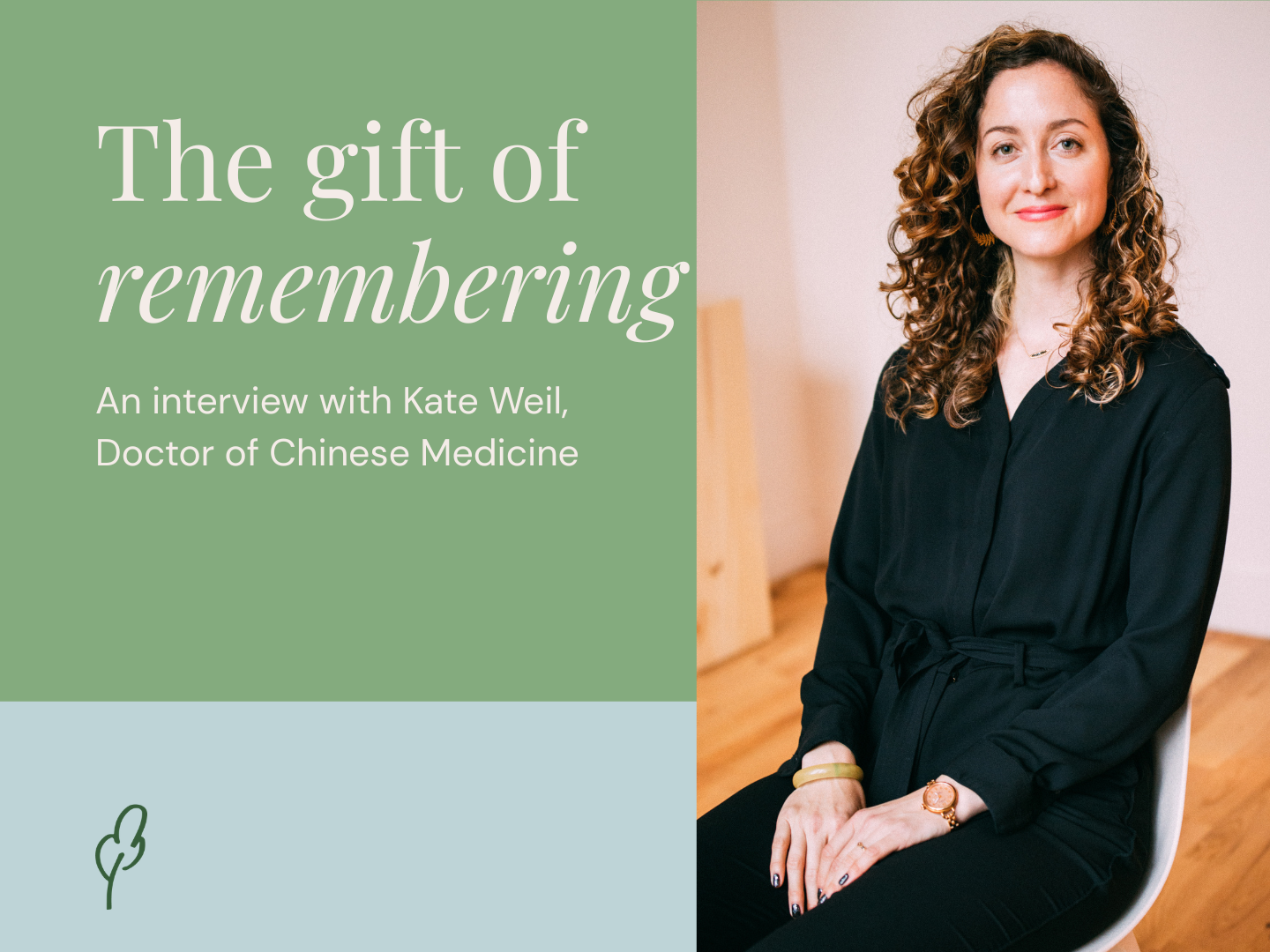
Psychotherapy is but one avenue of support that is available to you to help you change, grow, and heal. It is certainly the modality I am most comfortable with as a psychotherapist and I feel it’s equally important to help folks know that wide and varied options that are available. Sometimes psychotherapy is enough and sometimes it’s too much and sometimes it’s not enough. Today, I invited my dear friend Kate Weil, a doctor in Chinese medicine based in Brooklyn, NY and fellow Somatic Experiencing Practitioner to the blog to talk about her work in acupuncture.
For a long time I stood on the sidelines knowing lots of folks benefitted from acupuncture, but felt too afraid to try it myself. After a pretty traumatic pain flare up this past spring, I was open to anything and decided to give acupuncture a go, and what do you know…I found it incredibly supportive and helpful on many levels. So I thought I’d phone a friend or in this case, interview my friend to talk to others who might also be curious to learn more about this particular modality and how it could be a beautiful compliment to psychotherapy or a hopeful starting place for your healing journey.
So without further ado, I’d like to welcome Kate to this space!
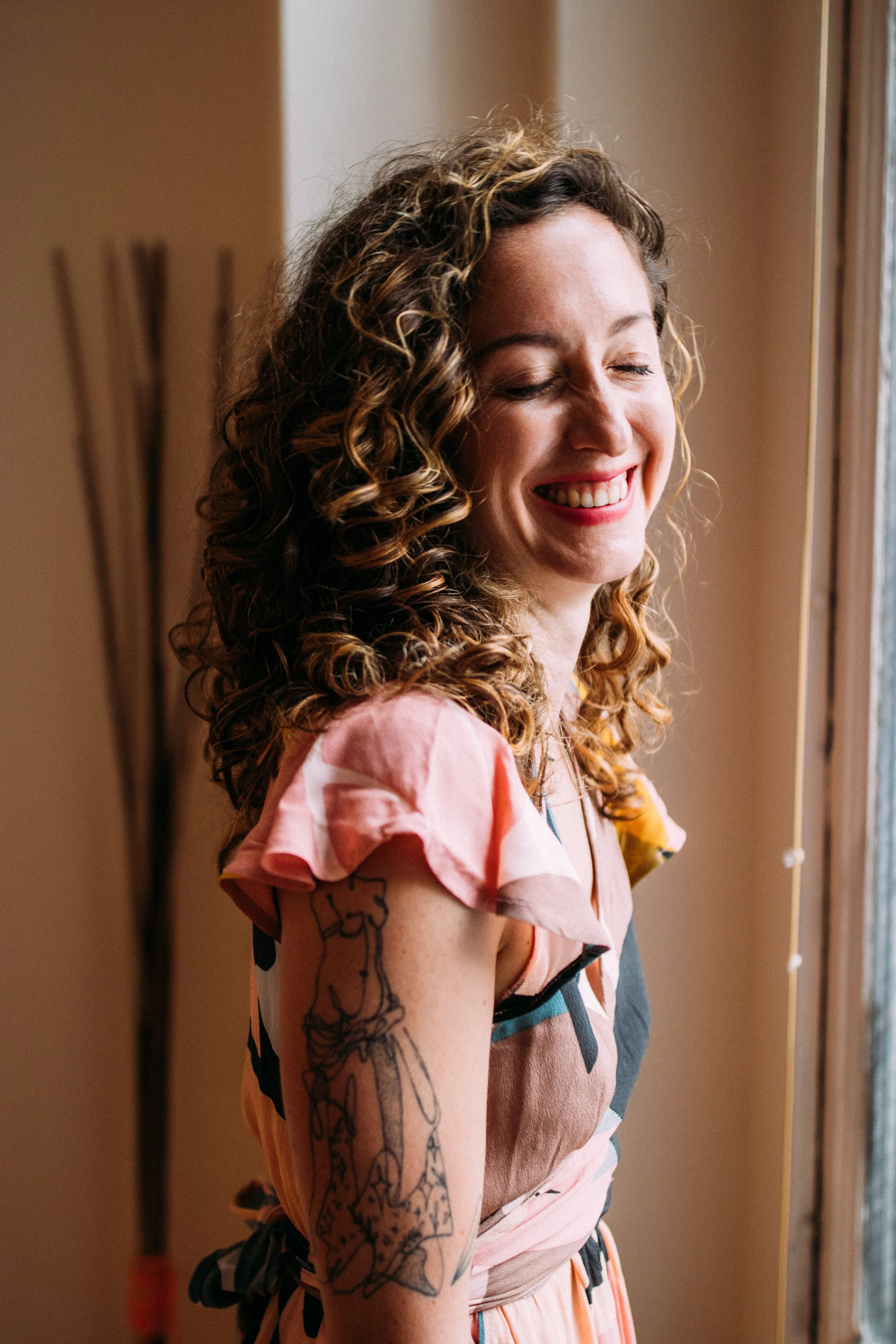
Hi Kate! Would you give us a quick introduction into you, your work, and how you found yourself in the world of Chinese medicine.
I am a doctor of Acupuncture Chinese medicine with my own holistic and integrative practice, Reil Well, in Brooklyn, New York.
I have extensive training and experience in reproductive health and gynecology and have collaborated with many fertility clinics in New York. I deepened my integrative approach working at the Center for Integrative Health and Well Being at Weill Cornell where I treated a diverse patient population with complex conditions ranging from chronic pain, cancer, and autoimmune disorders, to gastrointestinal issues, migraines, insomnia, and anxiety… and anything in between!
I now work in private practice based in my home studio where I feel most at ease and love supporting others feeling the same in their own bodies. This gives me the greatest ability to offer patients creative options for healing and brings together all the threads of my work: Chinese medicine, yoga, meditation, and Somatic Experiencing.
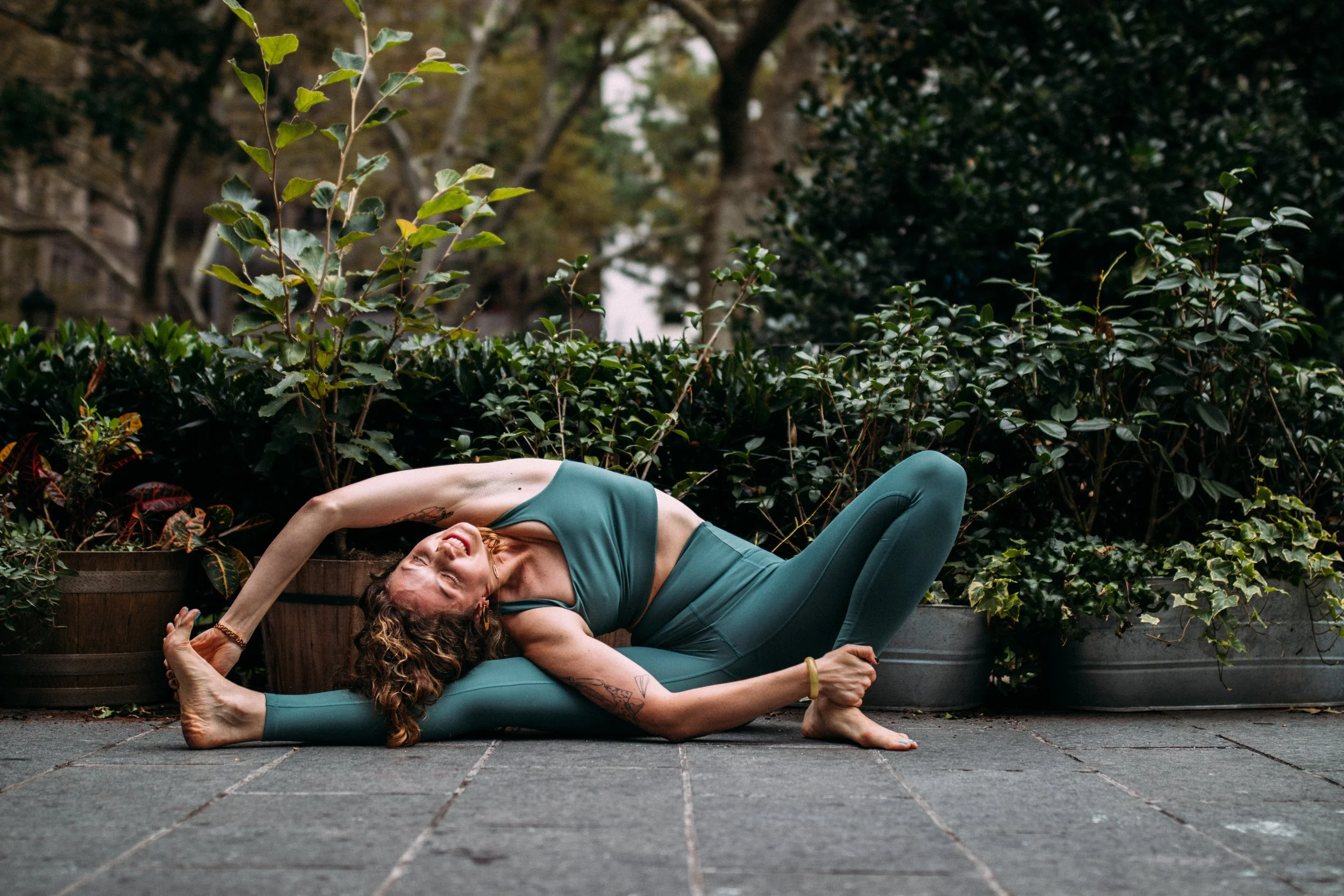
Before studying Chinese medicine, I taught yoga and mindfulness to young people in schools and community organizations all across NYC, and traveled the country training others to do the same. I have taught yoga to adults in studios and on retreat since 2006, and now primarily focus on 1:1 sessions to build somatic intelligence, release fascial tension, and deepen inner awareness.
Let's start with the basics for anyone who's never heard of acupuncture. How would you describe it to someone coming in totally fresh?
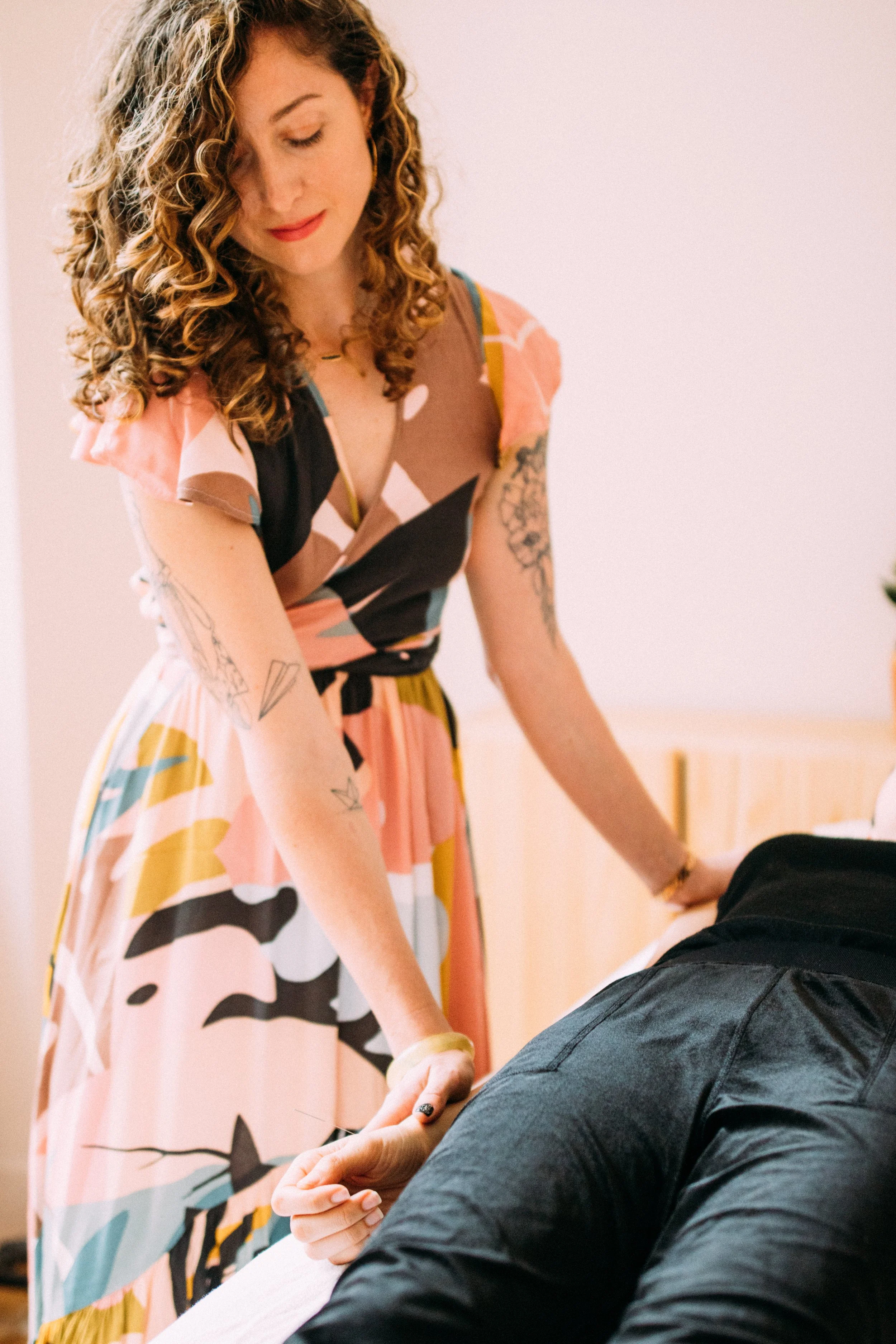
Acupuncture is one modality in the broader field of East Asian medicine, and I am trained in Traditional Chinese medicine (TCM). Chinese medicine is the oldest continually practiced system of medicine in the world! It is based on the concept of the body as a dynamic, integrated system. Acupuncture involves inserting very thin flexible needles at various acupoints on the body to remind the body of what it already knows: its innate orientation toward healing.
How did you find yourself in this world and what drew you to wanting to practice this modality?
I have been teaching yoga since 2006, and years ago, I was working at a high school here in Brooklyn. The students were inquisitive and vulnerable about themselves and their own bodies, and often asked me questions about their own health and wellbeing. I knew I didn’t know enough to fully offer what they were looking for which led me to consider what might be next. I had some profound experiences with acupuncture myself and I knew I was most interested in being able to develop a long-term relationship with people I care for. Studying Chinese medicine felt like a natural step in being able to serve patients throughout various transitions and phases of life.
I really appreciate that in my own sessions there's a specific flow to how things unfold. We chat a little about how I'm doing and what's happening in my body, then I get on the table for a few minutes before she comes back to place the needles. Once that's done, I'm alone under the heat lamp for around 20 minutes, and then she returns to take them out, and I have some time to reorient before stepping back into my day. There's this rhythm of togetherness and apartness that repeats throughout. Can you share more about why that rhythm is built into the session and why it matters for this kind of healing work?
Well, of course there’s simply the practical side of this, but I don’t think that’s what you’re getting at! I think of myself as a facilitator. At my best, I am offering the space and gentle guidance for the body to do what it already knows how to do. Humans are made for healing!
With as few prompts as possible, I remind the body of its deep capacity for rest and repair.
How do you decide where the needles go and how many to use? It's clearly not random. What are you paying attention to or sensing that tells you a needle needs to go here but not there?
This is a small question that is actually a pretty big one– you are asking to understand channel theory! In the Chinese medicine system there are 12 primary channels (sometimes called “meridians”) that run all along the body. Because I am a New Yorker, I liken this to the subway map. All of the acupuncture points on the body are like the subway stations along each line. There are as many approaches to this as there are acupuncturists, For example, when there is pain in a particular location in the body, it might be coming from somewhere else. Much like when there are delays at your subway station, it might be because there was a sick passenger uptown, or a track fire somewhere else along the line but it is affecting you at your station stop. I am often looking to see what channels (subway lines!) are most involved and then choosing points based on their particular actions and how they will communicate with each other to alleviate pain (restore train service!) For patients with orthopedic concerns, palpation will also guide me.
When I am doing an intake with a patient, another thing I am considering is the concept of root and branch. What is the root of the issue they are seeking support for, and what is the branch, or more surface symptoms they are experiencing because of it? Every treatment will combine both aspects. I am both looking to alleviate whatever pain is arising today as well as address the patterns that caused it to exist in the first place.
We met in Somatic Experiencing training together, and titration, meaning working little by little with intense feelings so as not to overwhelm the system, is such a central part of that work. From my own experience with acupuncture, it feels like titration is present here too. Can you share what that looks like in your practice and why it's so important to the care you offer?
One of the things I most appreciate about acupuncture is that, on the whole, it is self-titrating. This is because I am not adding or taking anything away from you. The needles are thoughtful reminders that your body already knows what to do and so I find acupuncture generally works gently and at the speed that your system is ready to receive.
That being said, it is really crucial as a practitioner to read the nervous system and body of the person in front of me and assess how much input is appropriate right now. Some patients are a bit sheepish that they are particularly needle sensitive; to me, that simply means they need less and are getting a lot of support from fewer needles.
Something I really appreciate about you is that you are not what I'd call an acupuncture evangelist. I remember the first time I mentioned I'd never tried it, and you said something like, "That's great. If it doesn't speak to you, don't do it." There was no pressure. For someone who is curious but nervous, or who is genuinely scared of needles, what would you want them to know?
The same thing! ;) Not everything is for everyone, and that’s okay. I have treated many people for the first time, and many people who were quite nervous about the whole thing. I start by letting them know how we will spend our time together so they have a sense of our appointment time and if they have any questions right away. When it’s time to get on the table I always have extra props nearby to dial in their comfort. And then I usually say something like this: “I am going to start needling in a few moments and I will start from your feet and move up your body from there. Some needles you may not feel at all; others you may feel more. This is totally normal and everyone senses this differently. If anything does not feel right for you at any point, let me know. I can always adjust the needle or take it out completely. There are hundreds of acupuncture points on the body and I can always use another one. We can also always take a brief break if you feel that would be useful at any point. You are completely in charge here. Let me know when you are ready to begin.”
We also don’t have to use needles at all! As I shared earlier, acupuncture is only one modality of Chinese medicine and there are a lot of ways in. I have extensive training using essential oils on acupuncture points with very light touch, and sometimes I use acupressure which I also often teach to patients so they can use at home. Other modalities include: cupping, gua sha, moxa, and herbal formulas taken in between sessions. These are all offerings that can be woven into a session with needles or used on their own.
In my sessions, I sometimes can't feel a needle going in at all, and other times there's a brief zap that's uncomfortable but then settles quickly. From what I've read, I believe that's called "de qi." Am I right? Can you explain what's happening in those moments?
Yes! De qi is sometimes translated as the “arrival of qi” or simply the response to the needle. One way to think about it is that your body is present and attuned to the conversation of sensation. It’s not a good/bad, but rather simply information about what is showing up in this particular moment. For example, might be an area of significant muscle tension that feels knotted or bound up, it could also be the exact opposite, like a vast well and the point is eager to drink up the needle. It can be buzzy and radiating, dull, achy, or heavy, or like you said, some feel like nothing much at all! From my end, every point and every body feels a bit different, so I can receive that information through the needle as well which guides my own point selection and treatment plan overall.
Layering different kinds of support is such an important part of any healing journey. In my own therapy practice, I work with a lot of people navigating developmental trauma, and I often sense that body-based work like acupuncture could be a meaningful complement as the healing deepens. How might acupuncture specifically support someone working through developmental trauma?
Acupuncture can support a practice of self-trust and mindfulness. By tuning in to sensations in the body in the here and now, we can entrain our nervous system to a new reality of safety– in ourselves, with others, and our place in the world. This is (of course!) slow, deliberate, precious work, and one that the body already has the wisdom for.
I believe many body-centered modalities are less about changing or creating something new, but rather a process of remembering the truth of who we really are.
During one of our Somatic Experiencing training exercises, you said something that has really stayed with me. You shared that you learn something new every single time you touch someone's body. It was such a beautiful and humble thing to say. Can you share more about what you meant?
There are so many directions I could take this! Let’s see. To begin, I am continually humbled by the privilege of having my patients’ trust in being part of their care, and I bring that reminder with me to each session. I also have a longtime practice of Zen meditation, and there is a core principle of Zen: “not knowing.” The idea is, that this quality of “not knowing” invites complete release of any preconceived notions, labels, or opinions, so that direct seeing or a fresh awareness is available. Before I bring my hands to anyone’s body, I let my head drop into my heart, so my hands can be empty with this “not knowing,” and therefore, fully receptive to whatever is arising in the moment. And from there, I get to be more responsive, compassionate, curious… and a natural result of that is I get to learn something new each time.
Is there anything you want to leave people with, whether they ever try acupuncture or not? And please share where people can find you and your work!
Your body is brilliantly capacious beyond comprehension and is always on your side! If what I shared resonates with you, have a look at my site for ways to work together. I look forward to supporting you!
Thanks so much for being here dear Kate. As she mentioned, please reach out to her if you’re looking for some body-based support.
Fig Holistic Psychotherapy is a somatic and trauma informed counseling practice helping folks struggling with trauma, disordered eating, and anxiety, and needing some somatic care. Reach out below to schedule a complimentary phone consult. Sessions are available to folks located in New York, North Carolina, South Carolina, and Texas and in person sessions will be available in Brooklyn, NY late 2026/early 2027.