
Why September Feels Like a Nervous System Reset (Even If You're Not Going Back to School)
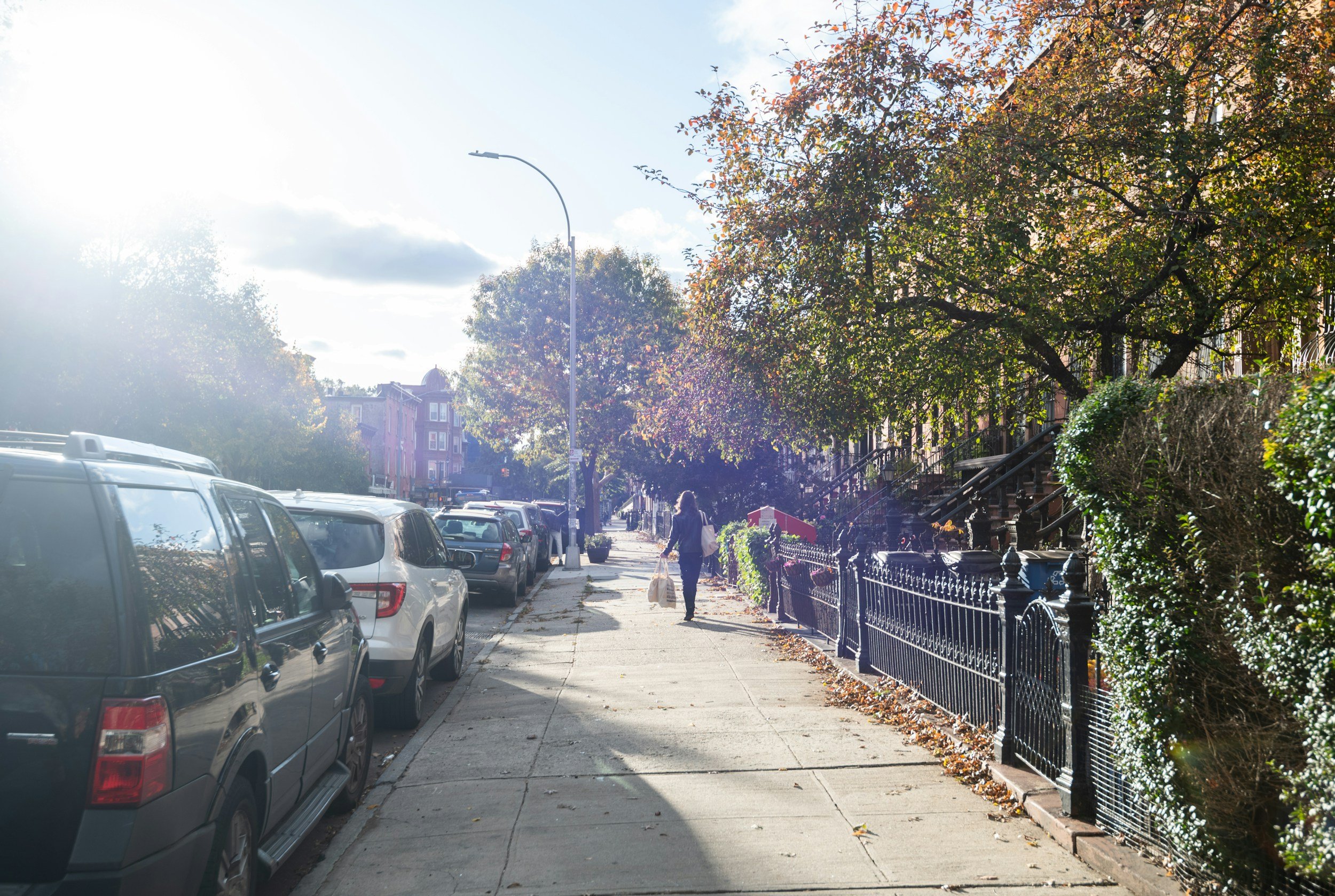
Somatic therapist in Brooklyn supporting nervous system regulation during fall transitions.
There's a reason September feels heavier than January, even though January is the month that actually gets called a "fresh start." School buses are back on the road. The group chats are suddenly full of routines and schedules. The light changes. And somewhere in your body, a switch flips that says it's time to get it together.
If you've felt that shift this week, a low hum of pressure, a tightening in your chest when you think about your calendar filling back up, that's not just in your head. It's in your nervous system. And understanding what's actually happening there is the first step toward moving through this season with more ease.
I'm Blake, a somatic therapist based in Brooklyn, and this is the kind of thing I sit with clients on all the time, especially right around now. It shows up differently for everyone. For some people it's a tight feeling behind the sternum that arrives out of nowhere on a Tuesday afternoon. For others it's trouble sleeping, or a shorter fuse than usual. The specifics vary, but the underlying story is often the same: a nervous system trying to keep pace with a season that just picked up speed.
Your Nervous System Doesn't Know the Difference Between September and January
Culturally, we treat September like a second New Year. New notebooks, new routines, new resolve. But your nervous system isn't reading a calendar. It's reading cues: changes in light, changes in noise, changes in other people's energy around you. When the whole city seems to speed back up at once, your body picks up on that collective shift and responds accordingly, usually by moving into a more activated, more "on" state, whether or not you have a kid starting kindergarten or a return-to-office policy kicking in.
This is why so many people, parents and non-parents alike, describe September as feeling like pressure before they can name why. It's not really about the calendar. It's about your body syncing up with a faster tempo, sometimes before your mind has agreed to it.
What "Nervous System Healing" Actually Means Here
I use the phrase nervous system healing a lot, and I want to be specific about what it means, because it's become a bit of a buzzword. It doesn't mean staying calm all the time or never feeling stressed. Your nervous system is supposed to shift states. Activation isn't the enemy. The goal of nervous system healing isn't a permanently relaxed body. It's a flexible one, a nervous system that can move into alert or activated states when a season (or a Tuesday) demands it, and then actually come back down afterward instead of getting stuck there.
For a lot of people, especially those carrying some history of chronic stress or trauma, that "coming back down" part is the piece that's missing. You get activated by the pace of September, and your body doesn't fully return to baseline. It stays a little braced. Multiply that over weeks, and you end up in a low-grade state of overwhelm that feels like it came out of nowhere, when really it's been building since the first week of the month.
The Somatic Lens on Seasonal Transitions
In somatic therapy, we don't start with the thoughts ("I have too much to do," "I'm not ready for this"). We start with the body, because the body is usually the first to know something has shifted, and often the last to get consulted about it.
A few things I notice in clients (and in myself, honestly) heading into September:
Shallower breathing. When your calendar fills up, your breath tends to move higher in your chest without you noticing. This keeps your body in a subtly activated state even when nothing urgent is happening in the moment.
Bracing in the shoulders and jaw. These are common places we store anticipatory stress, stress about what's coming rather than what's actually happening right now.
A harder time landing in the evenings. If your days feel faster, your body may need more time to downshift at night, even if you're doing the same wind-down routine you always have.
None of this means something is wrong with you. It means your nervous system is doing exactly what nervous systems do: responding to a change in pace. The work isn't to override that response. It's to give your body enough support that it can move through the response instead of getting stuck partway.
Titration: Taking the Transition in Smaller Doses
One somatic principle I come back to often, especially this time of year, is titration: the idea of taking in change in small, manageable doses rather than all at once. Your nervous system can handle a lot, but it handles it better in pieces it can actually process, rather than the full weight of "everything is different now" arriving in one wave on September first.
Practically, that might look like choosing one part of your routine to reset this week instead of overhauling your entire schedule, or giving yourself a genuine transition window between a busy day and the rest of your evening instead of walking straight from your last obligation into the next one. Small, sequenced adjustments let your body catch up with the pace change instead of getting flooded by it.
A Few Somatic Tools to Try This Week
These are simple, and that's the point. Nervous system regulation doesn't require an hour you don't have.
Orient to the room. Before you move into your next task, take fifteen seconds to actually look around wherever you are. Notice the corners of the room, the light, a few objects. This is a quick way to signal to your nervous system that you're safe here, right now, which can ease you out of a more activated, future-focused state.
Lengthen your exhale. You don't need a formal breathing exercise. Just notice if your exhale is shorter than your inhale, and if it is, let it get a little longer. A longer exhale is one of the more reliable, low-effort ways to nudge your body toward its parasympathetic, "rest and digest" state.
Give transitions a beat. Between meetings, between drop-off and work, between work and home, try building in even sixty seconds of nothing. Not scrolling, just a pause. This is titration in miniature: it gives your body a small buffer instead of asking it to snap directly from one gear to the next.
Notice where you're bracing. A few times a day, do a quick scan: jaw, shoulders, hands. If you notice tension, you don't have to fix it. Just noticing it is often enough to soften it slightly, and it builds your capacity to catch activation earlier over time.
When It's More Than a Seasonal Adjustment
Some September heaviness is just that: seasonal, temporary, something that eases as your body adjusts to the new pace over a few weeks. But if you notice that this feeling of being braced or overwhelmed isn't easing, or if it's connected to a bigger pattern you've been carrying for a while, that's often a sign there's more going on underneath the seasonal shift, sometimes tied to earlier stress or trauma your nervous system is still holding.
This is where working with a somatic therapist can help. Somatic therapy for trauma isn't about talking through what happened over and over. It's about helping your nervous system complete responses it wasn't able to complete at the time, so your body isn't still bracing for something that's already over.
A useful gauge is duration. A rough week or two at the start of September, easing gradually as routines settle, is a normal adjustment. A sense of dread or bracing that stays sharp well into October, or that feels bigger than what's actually on your calendar, is worth paying attention to. Your body tends to be a reliable narrator here, even when it's hard to make sense of what it's telling you.
Working Together
I'm a somatic therapist in Brooklyn, and I work with people navigating exactly this kind of thing: nervous systems that are working hard to keep up, sometimes because of an ordinary busy season, sometimes because of something older that a busy season tends to stir up. If September has you feeling more activated than usual and you're curious what somatic work could look like for you, I'd be glad to talk.
You can find more about my approach and how to get started with a Brooklyn somatic therapist, or reach out directly to set up a first session.
Your nervous system isn't broken because September feels like a lot. It's just responding to a real shift, the way it's supposed to. With the right support, it can catch up.
Other Services Offered
At Fig Holistic Psychotherapy, we provide a range of services to help meet you where you’re at. We specialize in long-term psychodynamic treatment helping you come into more contact with yourself, your story, your emotions, and your body. Sessions are held virtually and in person sessions in Brooklyn, NY will be available end of 2026, early 2027. Additional mental health services include eating disorder therapy, friendship therapy, EMDR, and trauma therapy. For more questions, here’s the FAQ page. Also, not quite ready to start therapy but would love a book recommendation? Browse our library here where we update what we are reading regularly because we really like reading. :)